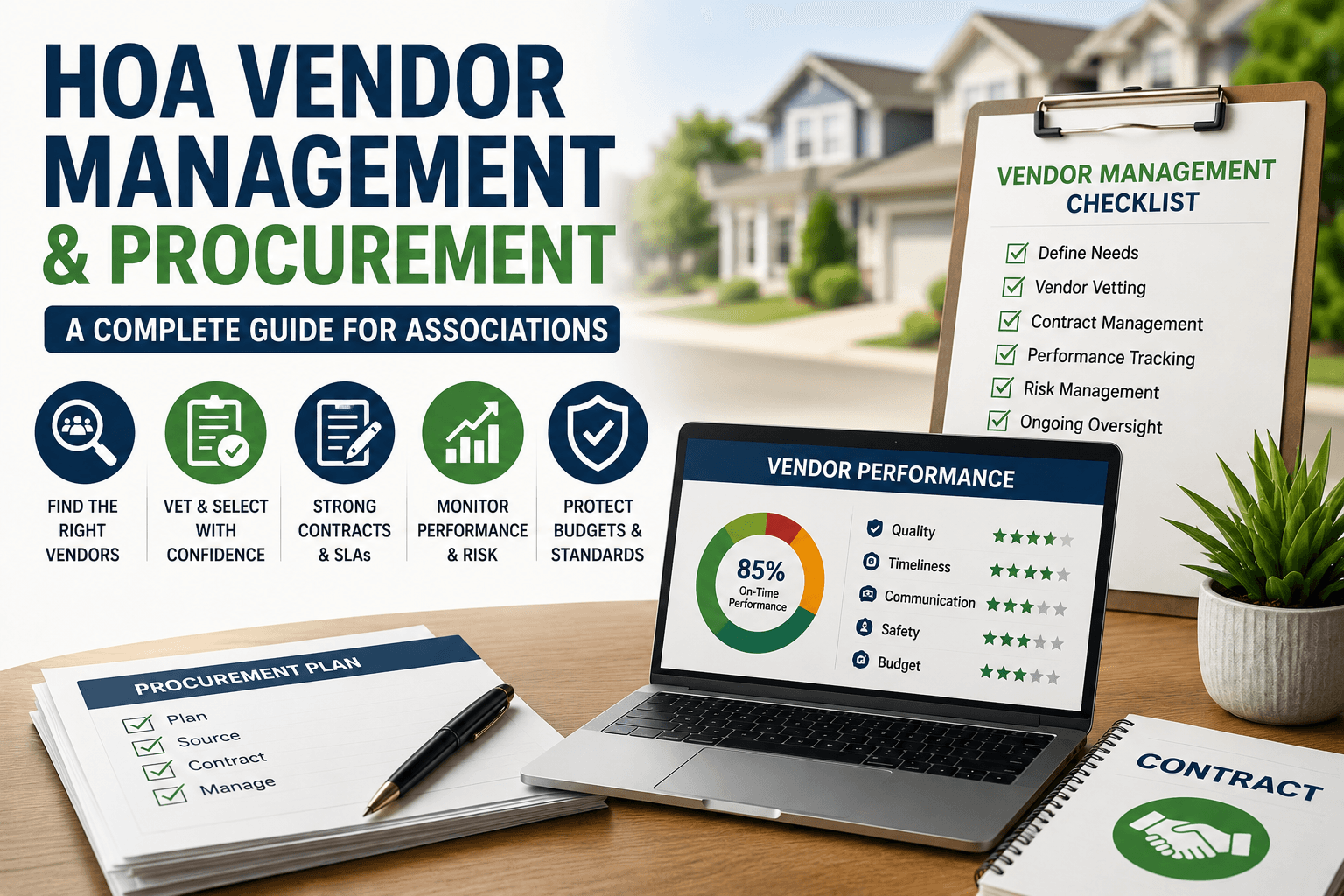
Smart boards use HOA vendor management to pick, guide, and review every vendor that delivers goods and services, ensuring effective vendor selection. This guide explains the procurement process, simple procurement strategies, and tools that make supplier management easier.
Understanding Vendor Management
Vendor management means planning, choosing, and guiding each supplier across the procurement life cycle. Boards use management strategies, supplier relationship management, and risk management to protect cash and optimize outcomes in their vendor relationships.
What is Vendor Management?
The definition of vendor management covers how procurement teams source, select, negotiate, onboard, and oversee each vendor. A vendor management system supports procure-to-pay, tracks invoices, and strengthens compliance.
Importance of Vendor Management for Associations
Effective vendor management helps associations meet goals, cut costs, and speed onboarding through strategic procurement. With contract management and vendor risk management, boards improve vendor performance, protect the supply chain, and gain measurable savings.
Vendor Management Challenges
Common challenges include poor visibility, weak data, and slow communication. Missed documents, unclear KPIs, and uneven performance harm compliance, timelines, and cash flow.
Vendor Management Process
The vendor management process links procurement activities to results. Procurement leaders map steps from planning and sourcing to contract management, onboarding, oversight, and renewals.
Steps in the Vendor Management Process
Key steps include research and selection, negotiation, onboarding, performance tracking, and risk checks in the vendor relationship. The following actions help ensure effective monitoring:
- Use KPIs and audits to track delivery, quality, and compliance.
- Apply procure-to-pay processes to monitor invoices and maintain control.
How to Vet Vendors for HOA
Define needs, set service levels, standardize RFPs, and score proposals with a clear matrix. To build a well-rounded evaluation, focus on the following areas:
- Review financials and legal records
- Confirm security and continuity
- Prioritize full value, not only price
Creating a Vendor Oversight Checklist
Build a checklist with performance criteria, spend data, risk indicators, and market research. Involve stakeholders to spot gaps, reallocate to top performers, and tighten oversight for critical suppliers in your supply chain management.
Best Practices in Procurement and Vendor Management
Strong procurement and vendor management starts with clear needs, simple processes, and fair competition through strategic procurement. Use consistent strategies and standard tools (RFPs, oversight checklists) to keep compliance, risk, and performance on track.
Identifying and Sourcing Vendors
Begin by mapping needs, then source vendors through referrals, directories, and RFPs as part of your vendor selection process. Use a checklist to rate capacity, quality, price, safety, and insurance; verify references and financials; document in your VMS.
Contractor Selection Process Explained
Negotiate clear terms, SLAs, pricing, and payments tied to accepted deliverables. Include timelines, compliance, warranties, and data security; then onboard with contacts, safety rules, and procure-to-pay steps.
Streamlining Procurement Processes
Adopt supplier management software and shared portals to replace emails and spreadsheets. Automate reminders, insurance tracking, KPIs, and connect procure-to-pay for approvals and invoices to enhance your vendor management strategy.
Contract Management and Oversight
Contract management turns choices into results with clear scopes, milestones, and acceptance tests. Use a tracker for duties, renewals, and certificates; link performance to payments and store records for audits.
Best Practices for Contract Management
Set measurable deliverables, KPIs, deadlines, and escalation paths; tie payment to milestones. Keep independent logs, require insurance and reports, and align terms to SRM goals while managing vendors effectively.
Monitoring Vendor Performance
Use a scorecard (on-time rate, defects, response speed, safety, budget) and quarterly reviews. Apply red-yellow-green metrics so boards see trends fast and guide improvements.
Handling Vendor Issues and Disputes
Act quickly with a corrective action plan and follow-up to ensure effective vendor management practices. Shift work to backups if risk stays high; offboard cleanly and document lessons.
Conclusion
Great results come from clear sourcing, fair selection, strong contracts, and steady oversight. Use RFP templates, vetting checklists, and simple KPIs to guide vendors and align budgets and risk across the life cycle.
Summary of Key Takeaways
Define needs, standardize RFPs, and score vendors against best practices. Negotiate clear SLAs and tie pay to accepted work. Monitor with checklists and dashboards; review often and fix issues early as part of your vendor management strategy.
| Area for improvement in vendor onboarding and management practices. | Key Actions |
| Preparation for vendor selection and onboarding is crucial for successful vendor management. | Define needs, standardize RFPs, and score vendors against best practices |
| Execution & Oversight | Negotiate clear SLAs; tie pay to accepted work; monitor with checklists and dashboards; review often and fix issues early |
Contact Green Ocean Association Management for Assistance
Need help with HOA vendor management, vetting, or contractor selection to optimize your vendor onboarding? Green Ocean Association Management provides RFP templates, vetting checklists, and contract oversight. Contact us today to streamline procurement and protect your community’s budget and standards.