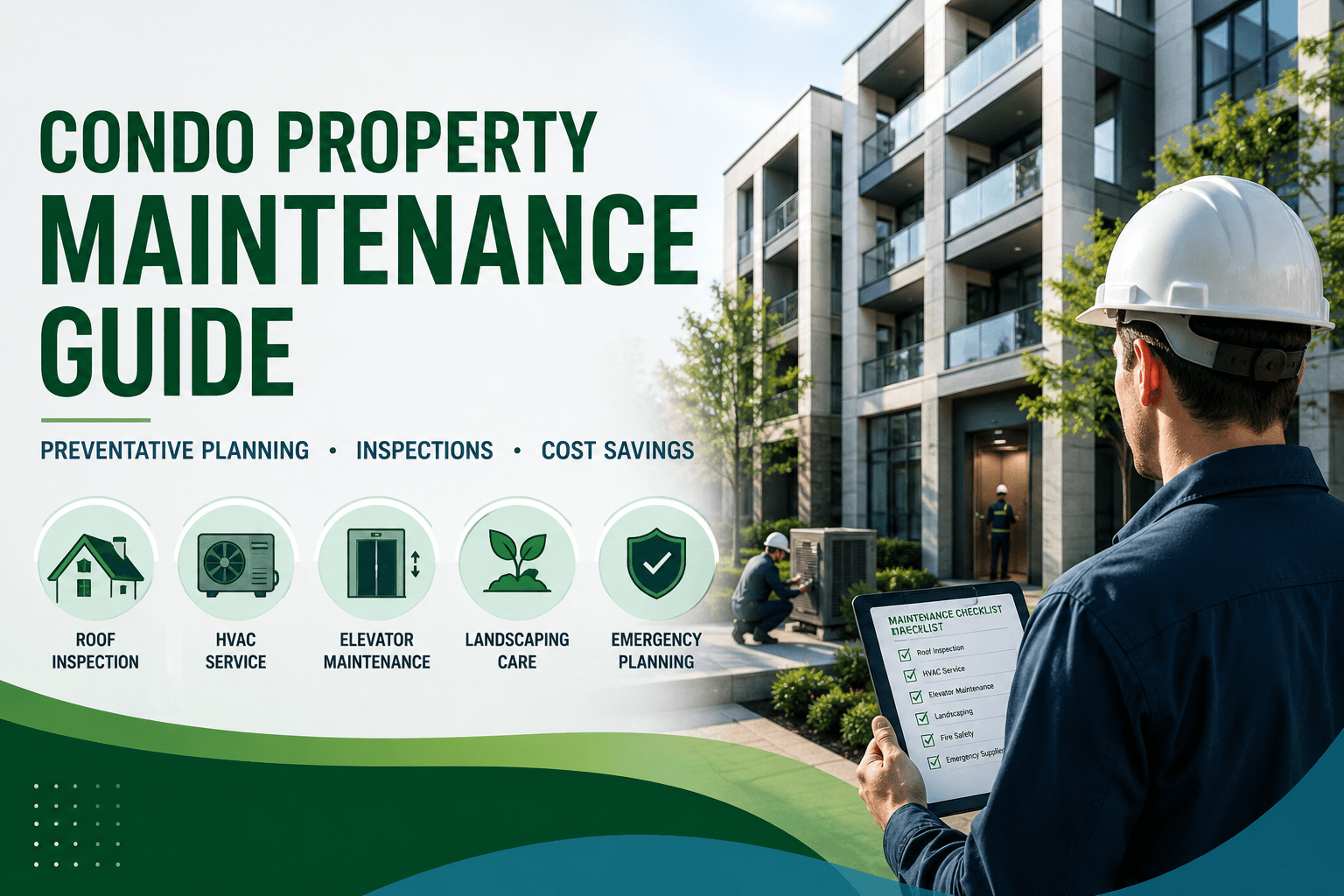
Condo property maintenance keeps a condominium safe, clean, and reliable condo management ensures the health and safety of all residents.. With a simple maintenance plan, boards can guide inspections, schedule upkeep, and control maintenance costs. This guide explains preventative maintenance for condoscommon area maintenance, property owners, and a management plan are essential for a well-maintained community. seasonal condo maintenance checklist.
Understanding Condo Property Maintenance
Condo property maintenance is the full set of maintenance tasks that protect property value and reduce costly repairs. It spans routine maintenance, reactive maintenance, and predictive maintenance. Good building management uses inspections, work orders, and clear maintenance schedules to guide proactive maintenance.
What is Condo Property Maintenance?
Preventive maintenance for condos uses regular inspection, repair, and upkeep to stop a breakdown before it happens. Reactive maintenance is damage control after an emergency like a leak or elevator failure, often highlighting the signs of failure in electrical systems. Routine maintenance covers cleaning, landscape care, and common areas. Predictive maintenance uses data to time replacement.
Importance of a Maintenance Plan
A written maintenance plan makes proactive steps are easy to implement with a management plan that focuses on regular maintenance. and keeps maintenance costs predictable. An effective preventive maintenance plan boosts property value, supports safety, and limits disruption for tenants and owners. Regular inspections and a checklist help avoid costly repairs and meet local building requirements.
Types of Maintenance Strategies
Every condo needs a balanced maintenance strategy. Use preventative maintenance to inspect and service assets, reactive maintenance for urgent fixes, and predictive maintenance to forecast wear. Add seasonal tasks, track deferred items, and set rules for emergency response to keep condos well-maintained year-round.
Creating a Comprehensive Maintenance Plan
A strong property maintenance plan lists each system, the type of maintenance, and the maintenance schedule. Include roofs, HVAC systems, elevators, and exterior finishes. Add clear emergency steps, contact details, and a work order flow so building maintenance and property management can act fast.
| System | Type of Maintenance: Regular maintenance versus reactive maintenance for smoother operations. |
| Roofs | Inspection and repair per maintenance schedule |
| HVAC systems | Servicing and filter changes per maintenance schedule |
| Elevators | Safety checks and servicing per maintenance schedule |
| Exterior finishes | Cleaning and repair per maintenance schedule |
- Emergency steps: Define clear actions for urgent issues.
- Contact details: List who to call for each system.
- Work order flow: Outline how requests are submitted, approved, and completed.
Components of a Property Maintenance Plan
List assets, assign inspection frequency, and define repair or replacement triggers. Tie each item to a checklist and a routine maintenance plan for regular maintenance of all property systems. Document emergency contacts, supply locations, and steps for fires, floods, or power loss. Review often so your property maintenance strategy stays effective.
| Task Area | Key Actions |
| Asset Management | List assets, set inspection frequency, define repair/replacement triggers, link to checklists and maintenance plans |
| Emergency Preparedness is crucial for property owners to ensure health and safety in their condos. | Document emergency contacts, note supply locations, outline steps for fires, floods, or power loss |
Developing a Preventative Maintenance Schedule
Start with an audit of condo assets, then build a seasonal calendar. Use software to track time-based maintenance schedules for electrical systems and other critical infrastructure. track requests, vendors, inspections, and work orders. Align the preventative maintenance program with budgets. Regularly inspect HVAC, roofs, and common areas to support long-term property management.
Seasonal Condo Maintenance Checklist
Here is a simple year-round condo maintenance plan that keeps tasks organized by season:
- Spring: Gutter cleaning, roof inspection, and a landscape refresh.
- Summer: HVAC service, exterior pressure washing, and safety checks.
- Fall: Apply sealants, clear downspouts, and schedule a boiler inspection.
- Winter: Manage ice control, run generator tests, and stock emergency supplies.
A clear checklist keeps maintenance for condos simple and helps avoid costly repairs across the year.
Common Area Maintenance for Condos
Common area maintenance shapes daily life. Clean halls, working lights, and tidy amenities help everyone feel safe and welcome. A steady maintenance schedule for lobbies, stairwells, fitness rooms, and parking supports property value and reduces reactive maintenance needs across the condominium.
Significance of Common Area Upkeep
Well-maintained common areas reduce hazards, lower breakdown risks, and cut noise from unexpected repair work. Clear signs, bright lighting, and smooth surfaces help residents and guests. Strong upkeep also supports inspections, vendor performance, and simple building management across condos and rental property units.
Best Practices for Common Area Maintenance
Use a preventative maintenance plan with daily, weekly, and monthly tasks. Inspect life-safety systems, test lighting, and track issues with work orders. Standardize cleaning, document repairs, and set service levels for condo maintenance services to keep standards high and ensure a management team is always prepared. maintenance costs controlled.
Landscaping and Outdoor Maintenance
Plan landscape care, irrigation checks, and exterior inspections on a routine maintenance cycle. Inspect siding, gutters, handrails, and outdoor lighting. Follow a seasonal condo maintenance checklist for time-based inspections and proactive steps to ensure health and safety. pruning, pressure washing, and storm prep are essential for a comprehensive condo management strategy. to prevent damage and limit emergency repairs or early replacement needs.
Inspection and Repair Processes
Effective condo property maintenance depends on a clear maintenance plan that blends preventive, routine, and predictive maintenance. Boards should use a checklist, maintenance schedule, and work order flow to guide inspections, repairs, and proactive upkeep.
Routine Inspections: What to Look For
Schedule inspection rounds for common areas daily, and inspect roofs, siding, gutters, and outdoor lighting seasonally. Inside the condominium, review HVAC systems, plumbing, and electrical panels. Document findings, prioritize repair tasks, and align the property maintenance plan with Alberta Condominium Property Act compliance.
Managing Reactive Maintenance
Reactive maintenance handles emergencies like a burst pipe, failed hvac, or elevator breakdown. Use a simple work order path, vendor call list, and resident alerts to control downtime and maintenance costs. Pair reactionary fixes with proactive steps so the condo avoids repeat failures.
Addressing Costly Repairs Early
Preventative maintenance catches small issues before they grow into costly repairs. A preventative maintenance plan with set inspection dates lets boards manage health and safety effectively. budget and schedule replacement at the right time, and reduce surprise bills. Early detection improves property value and supports long-term property management.
Vendor Management and Emergency Response
Strong property management depends on dependable condo maintenance services and a clear emergency playbook. Use the seasonal condo maintenance checklist to set expectations, track performance, and connect routine maintenance with rapid response steps for fire, flood, or power loss across condos.
Choosing the Right Condo Maintenance Services
Select vendors who understand maintenance for condos, hvac service, and common area upkeep. Ask for a preventative maintenance program, inspection reports, and fast work order turnaround. Partner firms should coordinate schedules, repairs, and documentation to support proactive maintenance and effective preventive maintenance.
Developing an Emergency Response Plan
Create simple steps for each emergency: who to call, where supplies are, and what to do first. Post contacts, shutoff locations, and evacuation routes in common areas. Test the plan, update it yearly, and link it to vendor management and after-hours building maintenance.
Utilizing Predictive Maintenance Techniques
Use sensors, runtime logs, and service history to predict when equipment needs repair or replacement. Track hvac trends, elevator cycles, and pump data to identify potential signs of failure early. Predictive maintenance reduces downtime, limits inspections on new gear, and keeps the condominium well-maintained with minimal disruption to each tenant.
Conclusion and Call to Action
Condo property maintenance works best with a proactive management plan that emphasizes regular maintenance. a simple, proactive maintenance strategy includes regular maintenance of electrical systems.. Combine preventive, routine, and predictive maintenance to cut maintenance costs, protect property value, and keep common areas safe. Link inspections, a checklist, and repairs to a clear maintenance schedule.
Summarizing the Importance of Condo Maintenance
Preventive maintenance for condos is more than a checklist; it protects assets, lowers risk, and reduces costly repairs. Inspections, smart repairs, and data help boards avoid reactive maintenance. Strong building management improves comfort, safety, and budgeting for condos and rental property communities.
Contact Green Ocean Association Management for Assistance
Need help building a property maintenance plan, seasonal condo maintenance checklist, or vendor network for emergency response and common area maintenance? Contact Green Ocean Association Management today for expert condo maintenance services that simplify inspections, repairs, and long-term property management.
Related Resources
For a comprehensive overview of association governance and operations, explore our HOA and Condo Association Management Guide. Boards looking to improve their process will also benefit from our resource on navigating homeowner association meetings in Boston.
Considering Professional Management?
If this feels like more than your board can keep up with, we can help. See our pricing or Get in touch to talk with our team about your community.