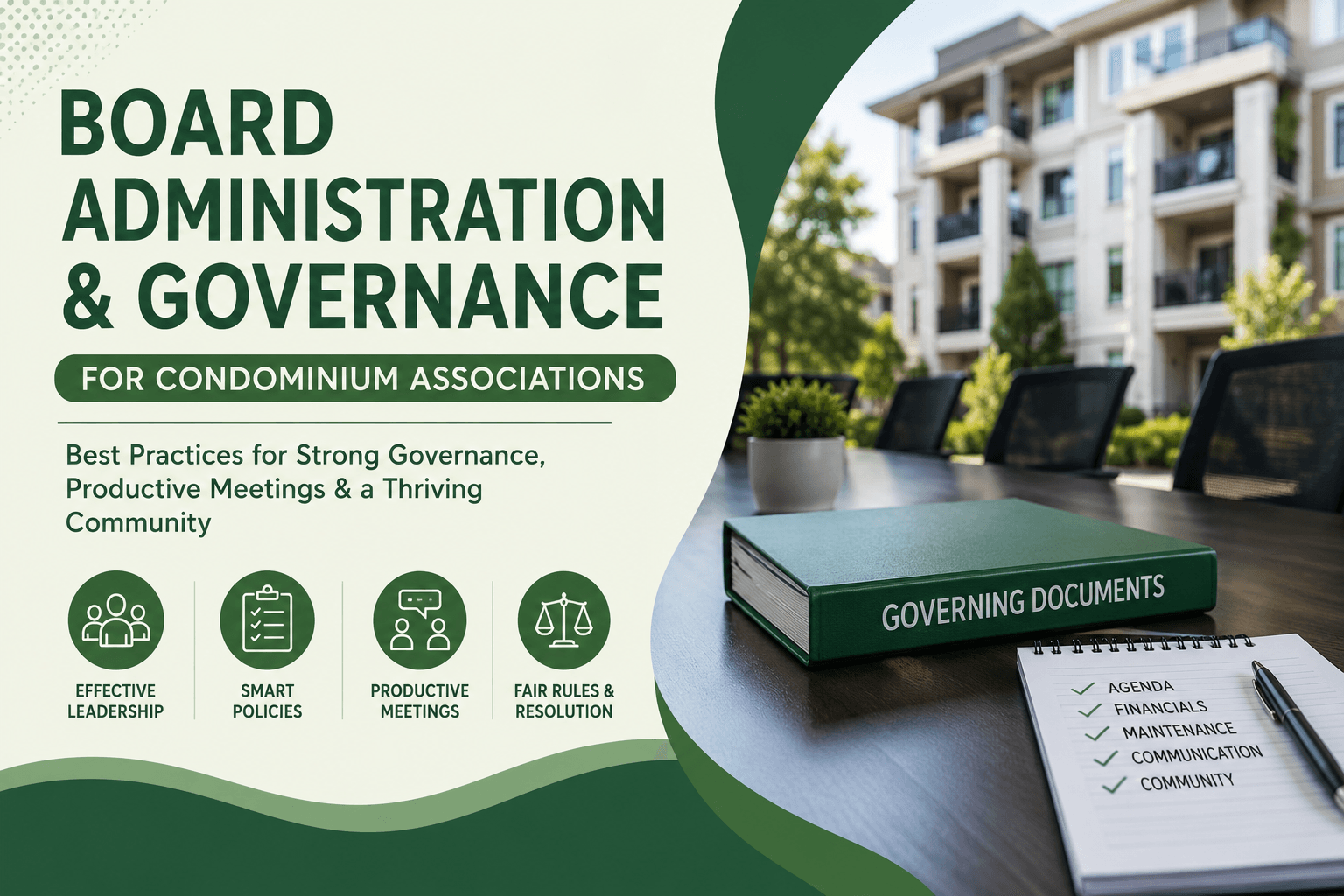
Running a condo community should feel clear, fair, and friendly. This guide explains HOA board administration in simple steps. We cover board governance best practices, association meeting management, and how to run condo board meetings. For Green Ocean Association Management, we focus on meeting facilitation, governance policies, bylaws support, and dispute resolution so volunteer homeowners can manage the community with confidence and ensure day-to-day decisions align with the community’s goals.
Understanding Condominium Associations
A condominium association, also called a condo association or homeowners association, helps manage shared spaces and common areas while adhering to management best practices. The association board sets rules, follows state laws, and uses governing documents to guide daily operations. Strong governance, clear financial oversight, and fair rule enforcement protect property values. With experienced management and expert guidance, association operations stay smooth, and by following management best practices, legal and financial risks go down.
What is a Condominium Association?
A condominium association is a community association formed by homeowners in a condo building or complex, which helps manage shared spaces and common areas according to applicable laws. The board of directors enforces governing documents, plans insurance, and cares for shared spaces. They review bids, oversee property management or management companies, and track a reserve fund. Good association governance keeps the condo safe, clean, and financially sound.
Roles of Homeowners in a Condo Association
Each homeowner is a member of the HOA and elects volunteer board members. Many volunteer homeowners join committees to help with association operations, strategic planning, and rule enforcement. They attend board meetings, read financial reports, and ask questions about the management fee or condominium management. With a strong management partner, residents get board support services and clear ways to resolve disputes.
Importance of Board Members
Board members have fiduciary duties to manage the community wisely. They set governance policies, use best practices, and guide financial management and financial oversight. They plan board meetings with good meeting facilitation, follow bylaws, and align with state laws. Working with HOA management or property management, they approve a bid, monitor association governance, and protect property values through experienced management.
Board Governance Best Practices
Good HOA board administration starts with clear rules and steady habits. Use simple governance steps that match your association’s governing documents and state laws. Keep board meetings short, fair, and focused. Share financial reports, plan for insurance needs, and track the reserve fund. Strong governance protects property values and lowers legal and financial risks.
Fiduciary Duties of Board Members
Act with care, loyalty, and obedience to the governing documents. This means honest financial oversight, smart use of the management fee, and fair rule enforcement. Review bids, watch the budget, and plan for reserve needs. Follow state laws and keep clear minutes so the community association trusts the condo board.
Strong Governance for Effective Management
Strong governance uses best practices to guide daily operations. Set policies for conflicts, contracts, and meeting facilitation. Align strategic planning with maintenance of shared spaces and common areas. Work with property management or management companies for condominium association management. Clear roles for the board and committees enable confident community management.
Expert Guidance for Board Decisions
Seek expert guidance from HOA management, legal counsel, and accountants when needed. Ask your management partner for data on bids, insurance needs, and financial management. Use easy-to-read dashboards for financial reports. Tie choices back to the governing documents. Experienced management keeps decisions fair, timely, and within state laws, ensuring that the board makes decisions that benefit the community..
Daily Operations of a Condominium Association
Daily operations keep the condominium association running smoothly. Schedule maintenance for common areas, track work orders, and review service bids. Watch spending, dues, and the reserve fund. Coordinate with property management on communications and rule enforcement. Simple processes, strong governance, and clear records protect property values.
How to Run Condo Board Meetings
Post an agenda early and stick to it. Start on time, confirm quorum, and follow meeting facilitation steps to ensure informed decisions are made. Limit side talk and keep topics tied to governance and budget. Invite homeowner comments at a set time. Record actions, not chatter. This is how to run condo board meetings well. Key steps include:
- Follow the facilitation sequence: motion, second, discussion, vote.
- Limit side conversations and stay focused on governance and budget topics.
- Schedule and invite homeowner comments at a designated time.
- Record decisions and actions rather than general discussion.
Association Meeting Management Strategies
Use association meeting management tools: timed agendas, consent calendars, and clear minutes to facilitate informed decisions. Share reports in advance so volunteer homeowners can prepare. Rotate presenters from committees and management companies. Track decisions and tasks. Close each meeting with next steps and due dates. These board support services make association operations simple and transparent.
Enforcing Community Rules and Bylaws
Enforce rules in a fair, step-by-step way linked to bylaws and governing documents. Send written notices, allow a hearing, and document outcomes. Focus on safety in shared spaces and common areas. Use dispute resolution options before fines. Work with a professional firm to stay within applicable laws and maintain trust across the condo association.
Working with Management Companies
Choosing the right management company can make HOA board administration easier. A good management partner understands association governance, state laws, and your governing documents. They guide board meetings, help with meeting facilitation, and support rule enforcement. With clear roles for the board of directors and the management team, daily operations stay smooth and fair for every homeowner.
Choosing a Management Partner
Use a clear bid process and compare services, fees, and communication style. Ask how the firm handles condominium association management, financial statements, and insurance needs, and solicit their expertise on special assessments. Check references from other HOAs and a nearby condo association. Pick a partner that offers board support services, follows management best practices, and respects the governing documents and state laws.
| What to Compare when selecting a professional firm for condominium association management. | What to Verify |
| Services, fees, and communication style in a clear bid process | How the firm handles condo association management, financial reports, and insurance needs |
| Board support services and adherence to best practices | References from other HOAs and a nearby condo association; respect for governing documents and state laws |
Benefits of Professional Firm Support
With experienced management, your condo board gains expert guidance for governance, budgeting, and strategic planning. A strong management team improves association meeting management, prepares clear financial reports, and supports dispute resolution. Professional support enforces rules fairly, maintains common areas, and protects property values while saving volunteer time.
Daily Operations and Property Management
Property management handles work orders, vendor bids, and maintenance in common areas so daily operations run on time. They track dues, the reserve fund, and financial management tasks under board oversight. The association board sets goals, and the management partner carries them out. This teamwork keeps the association safe, clean, and compliant.
Financial Management in Condominium Associations
Good financial management is the heart of HOA board administration. Use simple plans, clear budgets, and regular financial reports to manage the community. Follow governance best practices for financial oversight. Work with condominium management to review insurance needs, set reserve targets, and watch legal and financial risks. Strong governance keeps the condo stable for every homeowner.
Understanding Reserve Funds
Reserve funds are savings for major repairs like roofs and elevators. Order a reserve study to guide planning and set fair dues. The board should review reports yearly, update targets, and follow state laws. Clear policies in governing documents help enforce steady funding and protect property values.
Insurance Needs for Condo Associations
Maintain the right insurance for buildings, common areas, and director/officer risks. Review policies yearly with your management partner and agent. Check coverage limits, deductibles, and applicable laws to ensure comprehensive insurance for the condominium association. Align claims steps with operations and governing documents. Good coverage reduces legal and financial shocks and supports strong governance.
Budgeting and Financial Planning
Build a simple, goal-aligned budget with routine costs, management fees, insurance, and reserves. Compare actuals to plan with monthly financial reports. Use best practices: transparent timelines, clear approvals, and vendor bid reviews. With expert guidance from HOA management, the condo association can manage the community with confidence and fairness.
| Budget Elements | Management Practices |
| Routine costs | Transparent timelines |
| Management fees should be evaluated quarterly to ensure they align with the services provided by the professional firm. | Clear approvals |
| Insurance | Vendor bid reviews |
| Reserves | Monthly financial reports to compare actuals vs. plan |