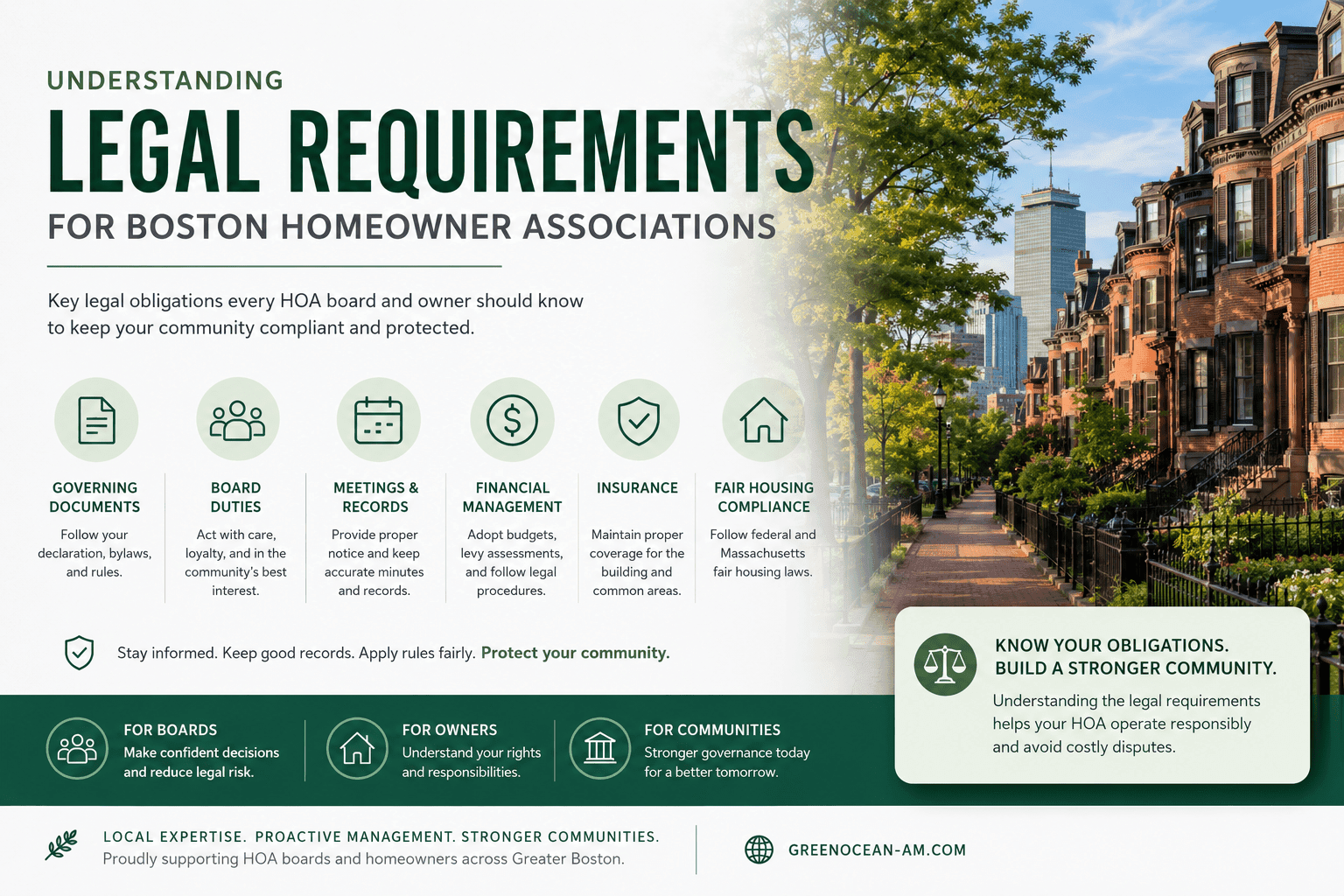
Running a community association comes with real responsibilities, and understanding the legal requirements for homeowner associations helps boards and owners stay on solid ground. In Boston, those requirements come from a mix of your association’s own documents and Massachusetts law.
Please note: this article is for general informational purposes only and is not legal advice. Always confirm your obligations with a qualified Massachusetts attorney.
How Massachusetts Law Treats Associations
Not every community is governed the same way. In Massachusetts:
- Condominiums are governed primarily by their recorded documents and the state Condominium Act (M.G.L. Chapter 183A).
- Homeowners associations for single-family or townhome developments are generally governed by their recorded declarations and covenants, along with general contract and, if incorporated, nonprofit corporation law.
Because Massachusetts does not have one comprehensive statute covering every type of association, your governing documents carry significant weight. Reading them closely is the first step toward compliance.
Core Legal Requirements Boston Associations Should Know
Follow the Governing Documents
The master deed, bylaws or declaration of trust, and recorded rules set binding obligations. Boards are expected to act within them, and owners are bound by them as well.
Board Fiduciary Duties
Board members generally owe duties of care and loyalty to the association. In practice, that means making informed decisions, avoiding conflicts of interest, and acting in the community’s best interest rather than personal gain.
Meetings, Notice, and Records
Most governing documents set rules for how meetings are called, how much notice owners receive, and how votes are taken. Keeping accurate minutes and financial records is both good practice and often required by the documents.
Financial Management and Assessments
Associations typically must adopt budgets and may levy assessments to fund shared expenses, following the procedures in their documents. Massachusetts condominium law also gives associations defined tools to collect unpaid common-area charges, which can include placing a lien on a unit. The specifics matter, so collections should be handled carefully and, when needed, with legal guidance.
Insurance
Governing documents usually require the association to maintain master insurance for the building and common areas. Boards should confirm coverage meets both the documents and any lender requirements.
Fair Housing and Nondiscrimination
Associations must comply with federal and Massachusetts fair housing laws, including the federal Fair Housing Act and the Massachusetts anti-discrimination statute (M.G.L. Chapter 151B). This affects how rules are written and enforced, and how requests such as reasonable accommodations are handled.
Common Compliance Mistakes to Watch For
- Enforcing rules inconsistently, which can create disputes and legal risk.
- Skipping required notice for meetings or votes.
- Poor recordkeeping, leaving the board unable to show how decisions were made.
- Handling collections informally instead of following the documents and the law.
- Letting insurance lapse or under-insuring the property.
Practical Tips for Staying Compliant
- Keep current copies of all governing documents and review them regularly.
- Document decisions with clear minutes and financial records.
- Apply rules evenly to every owner.
- Build a relationship with an attorney who knows Massachusetts association law.
- Consider professional management to keep processes consistent. A resource like greenocean-am.com can help boards stay organized and compliant.
Final Thoughts on Legal Requirements for Homeowner Associations
The legal requirements for homeowner associations in Boston flow from two places: your community’s recorded documents and applicable Massachusetts law. Boards that read their documents, keep good records, and apply rules fairly are far less likely to face disputes. Because rules can change and every association is different, treat this as a starting point and verify specifics with a qualified attorney.
Frequently Asked Questions
1. Does Massachusetts have a single HOA law?
No. Condominiums are governed largely by M.G.L. Chapter 183A and their documents, while other homeowners associations rely mainly on their declarations and general law. Confirm your situation with an attorney.
2. Can an HOA board be held personally liable?
Board members generally have protections when acting in good faith and within their authority, but duties still apply. Legal counsel and proper insurance, such as D&O coverage, help manage risk.
3. Are association meetings required to be open to all owners?
It depends on your governing documents, which set the rules for meetings and notice in Massachusetts. Review your bylaws or trust and verify with an attorney.
4. Can an association place a lien on my unit?
Massachusetts condominium law provides associations with collection tools that can include a lien for unpaid common charges. The process has specific requirements, so it should be handled carefully.
5. Do fair housing laws apply to HOAs?
Yes. Associations must follow federal and Massachusetts fair housing laws when writing and enforcing rules and when responding to accommodation requests.
This article is for general informational purposes only and is not legal advice. Laws and association requirements vary and can change over time. Please consult a qualified Massachusetts attorney and verify details with the appropriate authorities before acting.
Want help keeping your association organized and compliant? The Boston-based team at Green Ocean AM supports boards with governance, records, and day-to-day operations. Contact Green Ocean AM or explore more resources to learn more.
Considering Professional Management?
If this feels like more than your board can keep up with, we can help. See our pricing, learn more about our Allston-area association services, or Get in touch to talk with our team about your community.