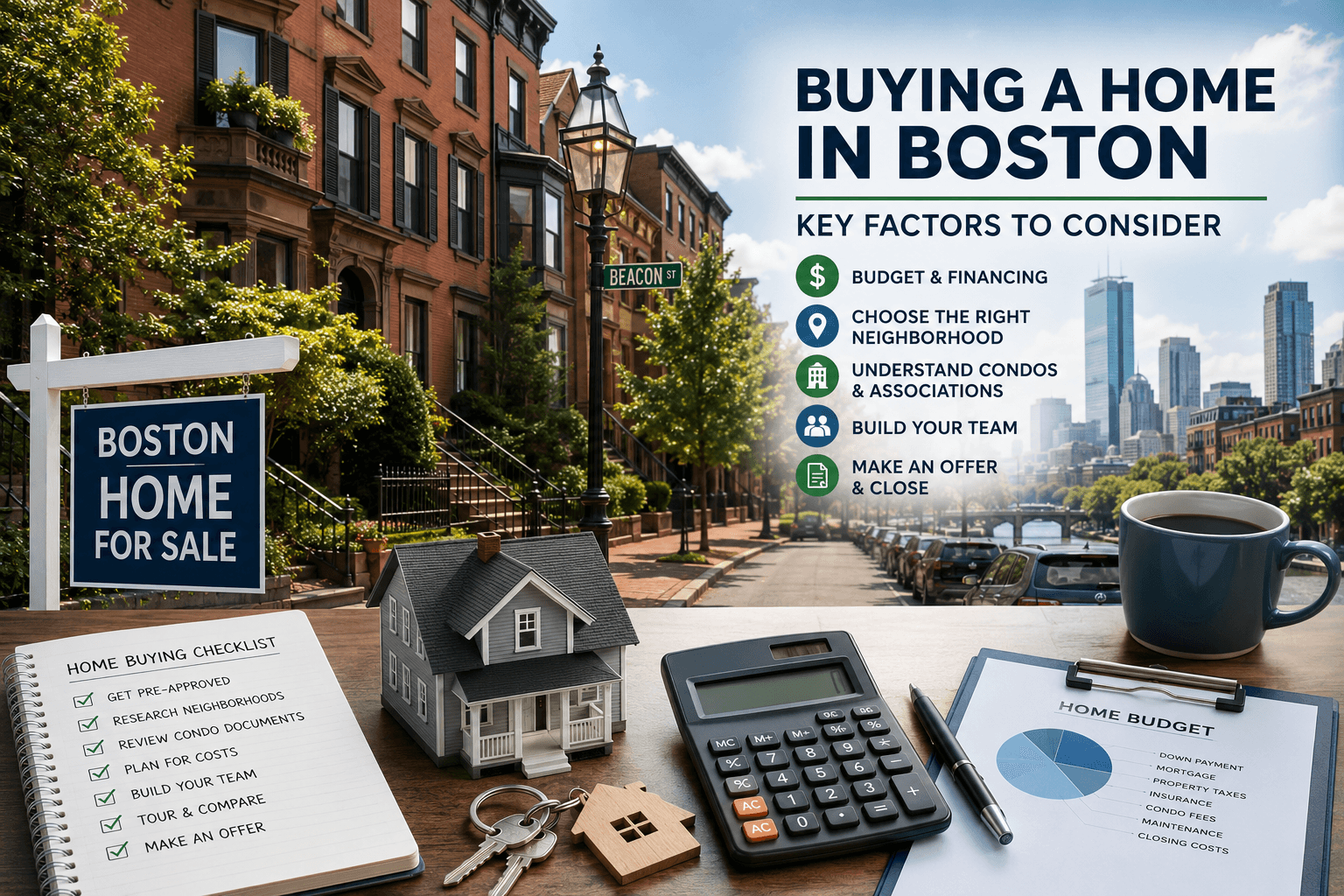
Buying a home in Boston is exciting, competitive, and full of details specific to this city. From historic brownstones to new condos, the path to a smart purchase runs through careful planning. This guide walks through the key factors so you can move forward with confidence.
Get Clear on Budget and Financing First
Before touring homes, understand what you can comfortably afford. In Boston, that means looking beyond the sticker price.
- Get pre-approved so you know your range and can act quickly in a competitive market.
- Factor in condo fees, since most Boston homes for sale are condominiums with monthly association costs.
- Budget for property taxes, insurance, and closing costs in addition to your down payment.
A lender can help you map the full monthly picture, not just the mortgage.
Choose the Right Boston Neighborhood
Boston is a city of neighborhoods, each with a different feel and price point. Back Bay and Beacon Hill offer historic charm, the Seaport leans modern, and areas like Dorchester, Jamaica Plain, and Roslindale appeal to buyers seeking more space or value. Consider commute, transit access, and lifestyle, and spend time in a neighborhood before committing.
Understand Condos and Associations
Because so much of Boston’s ownership market is condominiums, the association behind a unit matters as much as the unit itself. Before you buy:
- Review the budget, reserves, and recent meeting minutes.
- Read the rules on pets, rentals, and renovations.
- Ask about any special assessments or planned projects.
A healthy association protects your investment and your day-to-day experience.
Build Your Boston Home-Buying Team
A strong team makes the process smoother:
- A local real estate agent who knows your target neighborhoods.
- A real estate attorney, commonly used in Massachusetts transactions.
- A lender for financing and pre-approval.
- A home inspector to assess condition before you commit.
Making an Offer and Closing in Boston
Massachusetts transactions often follow a familiar path: an initial offer to purchase, followed by inspection, then a more detailed purchase and sale agreement, and finally closing. Deposits are typically due at key steps, and your attorney and agent will guide the timeline. In competitive situations, being pre-approved and responsive helps your offer stand out, but never skip due diligence to move faster.
Common Mistakes Boston Buyers Make
- Shopping before pre-approval, which slows you down in a fast market.
- Ignoring the association and focusing only on the unit.
- Underbudgeting for fees, taxes, and maintenance on older buildings.
- Waiving inspection without fully understanding the risk.
- Falling for one neighborhood without comparing alternatives.
Final Thoughts on Buying a Home in Boston
Buying a home in Boston rewards preparation. Get your financing in order, choose a neighborhood that fits your life, scrutinize the condo association, and lean on a trusted team. Take the time to do due diligence, and confirm the financial and legal details with your lender, attorney, and agent before you sign.
Frequently Asked Questions
1. How much do I need to buy a home in Boston?
It depends on price, loan type, and fees. Beyond the down payment, budget for closing costs, taxes, insurance, and condo fees. A lender can give you a personalized estimate.
2. Do I need a real estate attorney in Massachusetts?
Attorneys are commonly involved in Massachusetts home purchases, particularly at the purchase and sale stage. Many buyers find legal guidance valuable.
3. Are most Boston homes for sale condos?
A large share are condominiums, so understanding association fees, rules, and finances is an important part of buying here.
4. Should I get a home inspection?
An inspection helps you understand a property’s condition before committing. Skipping it to win a bid carries real risk, especially with older buildings.
5. How competitive is the Boston market?
It varies by neighborhood, price point, and season. Pre-approval and a responsive team help, but conditions change, so ask a local agent for the current picture.
This article is for general informational purposes only and is not financial, legal, or real estate advice. Costs, processes, and market conditions vary and can change. Please verify details with qualified lending, legal, and real estate professionals.
Buying a condo in Greater Boston? Once you own, the team at Green Ocean AM helps owners and associations keep buildings running well. Contact Green Ocean AM or explore more resources to learn more.