In the realm of homeowners associations (HOAs), managing vendor relationships is crucial for maintaining property values and ensuring resident satisfaction. As associations often rely on various vendors for services such as landscaping, maintenance, and security, it becomes essential to monitor their performance continuously. This article delves into the significance of vendor performance monitoring, the tools available, and best practices for HOAs to ensure they are getting the most value from their vendor partnerships.
Understanding Vendor Performance Monitoring
Vendor performance monitoring refers to the systematic evaluation of third-party vendors to ensure they meet the agreed-upon standards and deliver quality services. This process involves tracking key performance indicators (KPIs), assessing compliance with service level agreements (SLAs), and conducting regular reviews to identify areas for improvement.
Importance of Vendor Performance Monitoring
- Quality Assurance: Regular monitoring helps ensure that vendors consistently meet the quality standards set forth in contracts. This is vital for maintaining the overall satisfaction of residents and protecting property values.
- Risk Mitigation: By identifying potential issues early, associations can address them before they escalate into significant problems. This proactive approach reduces the risk of service disruptions and financial losses.
- Informed Decision-Making: Continuous monitoring provides valuable data that can inform decisions regarding contract renewals, negotiations, or even vendor replacements. This data-driven approach enhances the overall effectiveness of vendor management.
- Cost Control: Monitoring vendor performance can help identify inefficiencies that lead to unnecessary expenses. By addressing these issues, associations can better manage their budgets and allocate resources more effectively.
Key Performance Indicators (KPIs) for Vendor Evaluation
Establishing clear KPIs is essential for effective vendor performance monitoring. These indicators should align with the specific goals and needs of the HOA. Common KPIs include:
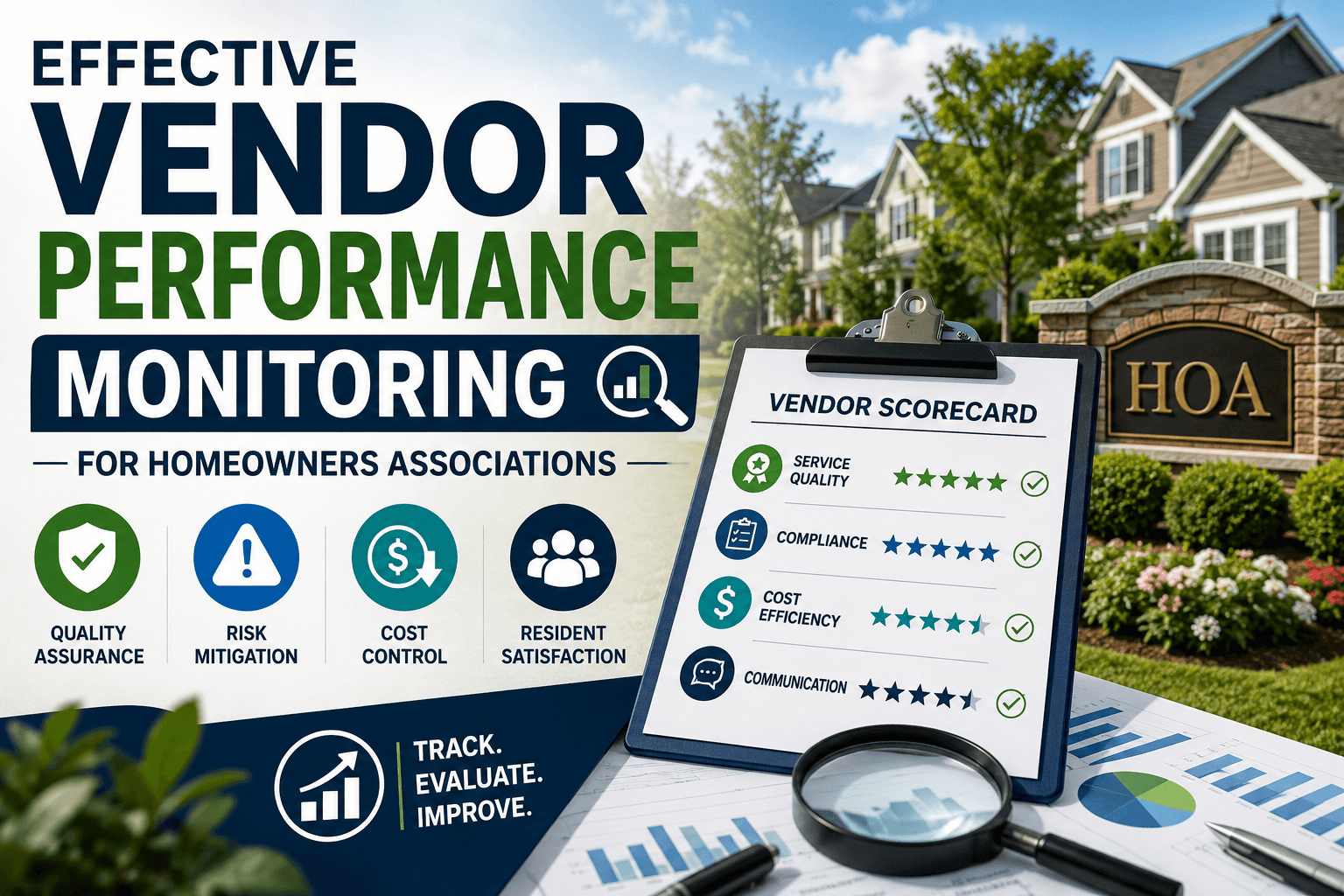
- Service Quality: Assessing the quality of services provided, including timeliness, accuracy, and adherence to specifications.
- Compliance: Ensuring that vendors comply with relevant regulations, safety standards, and contractual obligations.
- Cost Efficiency: Evaluating whether the services provided are cost-effective and within budget.
- Communication: Monitoring the responsiveness and clarity of communication between the vendor and the HOA.
Developing an Association Vendor Scorecard
Creating a vendor scorecard can streamline the evaluation process. This scorecard should include the KPIs mentioned above, along with a scoring system to quantify vendor performance. By regularly updating the scorecard, associations can track changes over time and identify trends that may require attention.
Tools for Vendor Performance Monitoring
To effectively monitor vendor performance, HOAs can leverage various tools and technologies. These tools can automate tracking, reporting, and communication, making the process more efficient.
Vendor Management Software
Investing in vendor management software can significantly enhance the monitoring process. These platforms typically offer features such as:
- Centralized Data Storage: Keeping all vendor-related information in one place for easy access and management.
- Automated Alerts: Setting up notifications for contract renewals, performance reviews, and compliance deadlines.
- Performance Analytics: Providing insights into vendor performance trends and areas for improvement.
Inspection Checklists
Using inspection checklists can help ensure that vendors meet the required standards during service delivery. These checklists can be customized based on the specific services being evaluated and can include criteria such as cleanliness, safety, and adherence to schedules.
Best Practices for Effective Vendor Performance Monitoring
Implementing best practices can enhance the effectiveness of vendor performance monitoring. Here are some strategies for HOAs to consider:
Establish Clear Expectations
Before engaging with vendors, it is crucial to set clear expectations regarding performance standards, communication protocols, and compliance requirements. This clarity helps prevent misunderstandings and sets the foundation for a successful partnership.
Conduct Regular Reviews
Regular performance reviews should be scheduled to assess vendor performance against established KPIs. These reviews can be quarterly or bi-annual, depending on the nature of the services provided. During these reviews, feedback should be shared with vendors to foster open communication and collaboration.
Foster Strong Relationships
Building strong relationships with vendors can lead to improved performance and better service delivery. Regular check-ins, open communication, and collaborative problem-solving can enhance the partnership and encourage vendors to prioritize the needs of the HOA.
Document Performance Issues
When performance issues arise, it is essential to document them thoroughly. This documentation should include details such as the nature of the issue, the impact on the HOA, and any corrective actions taken. Maintaining a formal issues log can help track recurring problems and facilitate discussions with vendors.
Addressing Emerging Risks
As the landscape of vendor management evolves, associations must remain vigilant in identifying emerging risks that could impact their vendor relationships. These risks may include changes in vendor ownership, regulatory requirements, or shifts in market conditions.
Proactive Risk Management
To mitigate emerging risks, HOAs should establish a proactive risk management strategy. This strategy may involve:
- Regular Risk Assessments: Conducting periodic assessments to identify potential risks associated with vendors and their services.
- Vendor Control Assessments: Evaluating the internal controls and risk management practices of vendors to ensure they align with the HOA’s standards.
- Utilizing Alerts and Monitoring Services: Subscribing to vendor risk monitoring services can provide real-time alerts regarding changes in vendor status or performance.
Conclusion
Effective vendor performance monitoring is essential for homeowners associations to ensure they receive quality services while managing risks and costs. By establishing clear KPIs, utilizing vendor management tools, and implementing best practices, HOAs can foster strong vendor relationships that contribute to the overall success of the community. Embracing a proactive approach to vendor management not only enhances service delivery but also protects property values and resident satisfaction.
In a competitive landscape, associations that prioritize vendor performance monitoring will be better equipped to navigate challenges and seize opportunities for improvement. By investing in the right tools and strategies, HOAs can create a robust framework for managing vendor relationships effectively.
Talk to Green Ocean’s Association Management Team
Handling this in-house is a lot to ask of volunteer board members. Get a clear picture of our HOA management pricing or Contact us to talk with our team about your community.