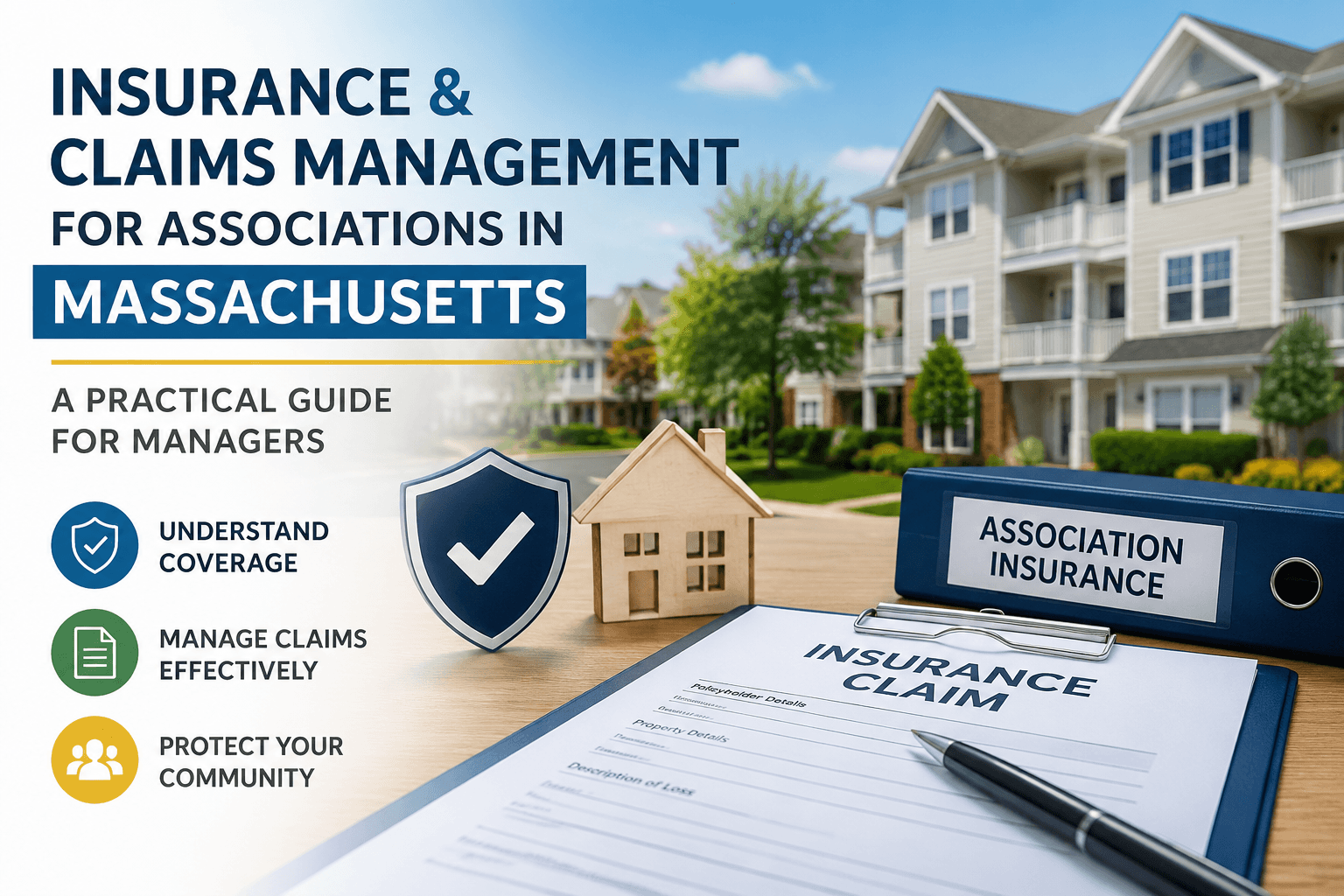
This guide helps association managers and board members in Massachusetts handle insurance and claims. Understanding your coverage and managing claims well protects your community’s finances, especially when the unexpected happens.
Understanding Insurance for Associations
A well-structured insurance program protects your association’s assets and gives members peace of mind.
Types of Insurance Coverage
Associations in Massachusetts can access several types of coverage. Organizations like MIIA offer plans that reduce a wide range of risks:
- Foundational benefits: health, dental, and vision insurance
- Digital and operational risk: cyber liability protection, property and liability insurance, and workers’ compensation
- Specialized needs: builders risk and supplemental group benefits
Why HOA Insurance Claims Matter
Managing HOA insurance claims well is a key part of sound financial planning and risk management. Proactive claims management uses insurance, instead of your reserves, to cover property damage and liability issues.
MIIA has returned $210 million in credits, discounts, grants, and rewards to its members since fiscal 2010. This shows the real financial benefit of a well-managed insurance program.
Condo Property Claim Considerations
When handling a condo property claim in Massachusetts, look closely at every detail to reach a fair, efficient resolution. Claims professionals often look for salvage opportunities to reduce losses.
Property risk is a year-round challenge. Preventive maintenance and a clear understanding of your policy are key to staying resilient as severe weather becomes more common.
The Insurance Claims Process
Knowing the stages of the claims process helps you guide your community through a difficult situation. Following the right timelines and documentation requirements keeps the process moving smoothly.
Claim Timelines: What to Expect
Timelines vary depending on how complex the claim is, how much damage occurred, and your policy’s details. Even so, expect a structured review process. Reporting the claim quickly is the most important first step, since it starts the insurance carrier’s assessment and investigation.
Required Documentation for Claims
Careful documentation is critical to a successful claim. Keep accurate records of all reviews, decisions, and related correspondence. This should include:
- Initial incident reports and photographs
- Repair estimates and contractor invoices
- Communication logs with your insurer
Well-documented claims give a clear, verifiable account of what happened, which helps claims professionals make informed decisions and confirm your association followed all required policies and laws.
Common Challenges in the Claims Process
Associations often run into a few recurring challenges, such as disputes over coverage limits, disagreements about property value, delays in processing, or the need to coordinate between multiple carriers. In Massachusetts, complex cases may also involve litigation or the state’s “93A” legal process. Staying current on industry changes helps you spot and solve these problems proactively.
Risk Management Strategies for Associations
Identifying Potential Risks
Spotting risks early strengthens your claims strategy and protects your association’s long-term finances. Property risk, including the growing threat of wildfires and flooding, is a year-round concern in Massachusetts. Putting preventive measures in place and regularly looking for gaps helps your association stay resilient.
Implementing Effective Risk Management Programs
A strong risk management program protects your association’s assets and keeps operations running smoothly. Organizations like MIIA offer risk management services focused on loss control and prevention, including awards and workshops covering topics like safety, wellness, health costs, cybersecurity, and public interactions.
Improving Risk Management Practices
Improving your risk management is an ongoing process. It means identifying areas to improve, adopting new tools and technology, and carefully rolling out new initiatives. Organizations like MIIA also provide training in cybersecurity, employment practices, facilities management, fleet management, governance, public safety, schools, and workplace safety.
Coordination and Resources for Claims Management
Crisis Planning for Associations
A solid crisis plan ensures your association responds quickly and in a coordinated way when something unexpected happens. Massachusetts associations should build clear strategies ahead of time to reduce the impact of emergencies and speed up the claims process. Resources like MIIA’s training programs help your team stay prepared to protect property, members, and finances.
Vendor Coordination During Claims
How well you coordinate vendors affects how fast and how cheaply your association recovers. When damage occurs, quickly engage contractors, adjusters, and restoration companies. Having a pre-approved vendor list and clear communication steps ready in advance keeps repairs on track and costs under control.
Utilizing Resources for Better Management
Using the right resources makes claims management easier. Organizations like the ICA offer claims professionals access to research, required certifications, and ongoing support to help manage complex situations with more confidence.
Reviewing and Managing Costs
Understanding Insurance Costs and Coverage
Understanding your costs and coverage in detail is essential for good financial management. The MIIA Property and Casualty Group Inc. provides property and casualty coverage for Massachusetts cities, towns, and other government entities that belong to the MMA.
The MIIA Health Benefits Trust, for example, offers:
- Health insurance (medical, dental, vision) for employees and retirees, with low costs and strong coverage from day one
- Additional discounts, often paired with auto and home insurance savings
Assessing Compensation and Benefits
Reviewing your compensation and benefits package matters for both your budget and your staff’s satisfaction. Strong benefits packages often include tuition reimbursement, paid parental leave, and solid health insurance. Many associations also offer a 401(k) with matching contributions, generous paid time off, and vision insurance, along with extras like AD&D insurance, a health savings account, life insurance, referral programs, and professional development support.
Strategies for Cost Management
Managing costs effectively helps your association stick to its budget and stay financially healthy. This means tracking expenses and resources carefully while keeping productivity high. Use your data and reporting tools to spot trends and improve performance. Understanding what drives rising health care costs also helps your board make smarter, more proactive decisions.
Get Support From an Experienced Management Team
Boards don’t have to manage this alone. Review our management fee structure or Contact Green Ocean to talk with our team about your community.