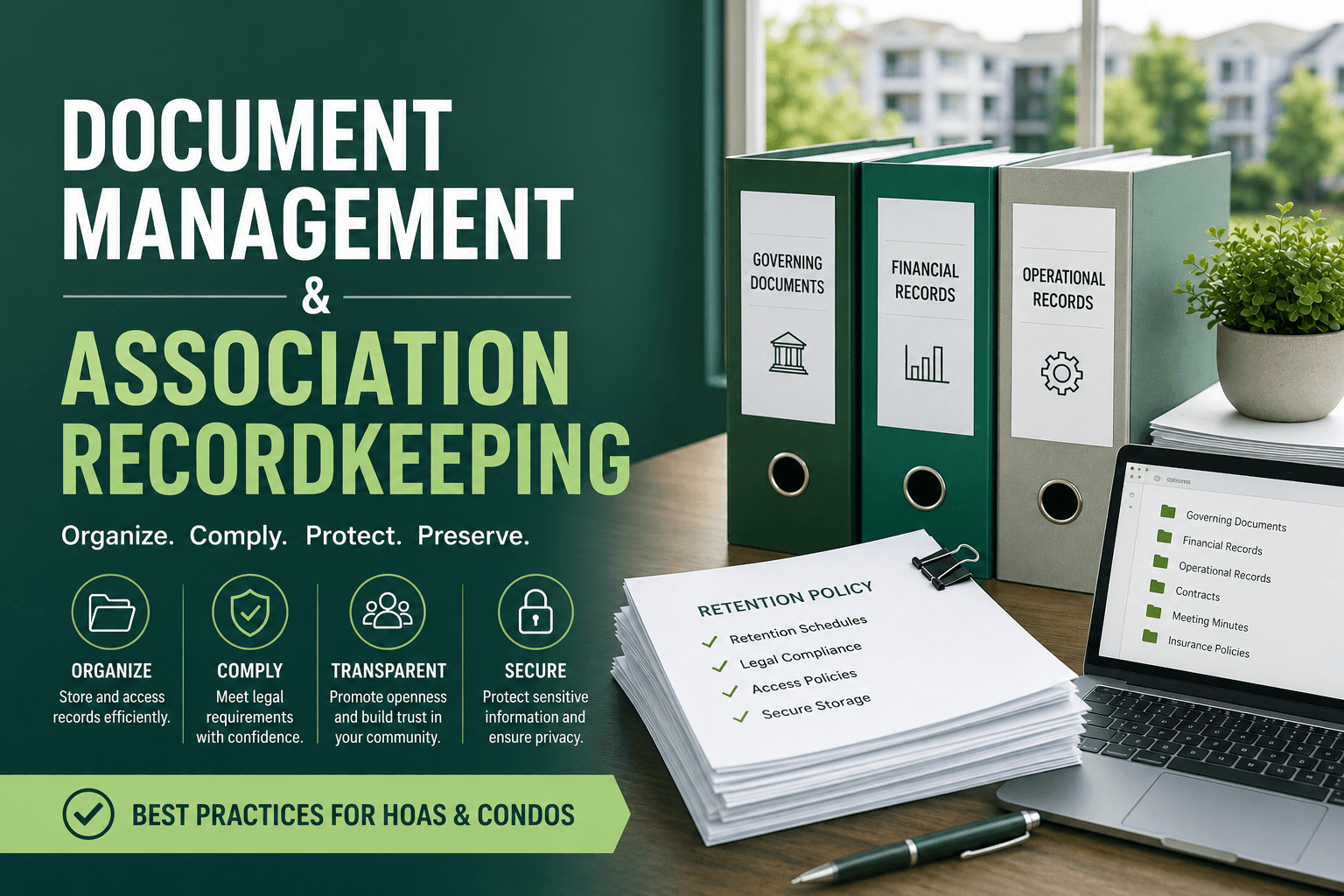
Good document management and careful recordkeeping are essential for every homeowners association and condo community. This guide covers what records to keep, how long to keep them, and how to stay compliant with state law.
What Is Document Management?
Document management is the process of organizing, storing, and accessing all the records your community needs. Keeping records tidy and communication transparent helps your association run smoothly.
Why Records Management Matters
Tracking fees and assessments accurately is one of the most important jobs for board members and managers. Careful recordkeeping protects the association legally, especially when collecting unpaid fees.
In Massachusetts, the law sets out a two-step notice process for overdue common expenses:
- First notice: Sent to the unit owner and mortgage holder once a payment is 60 or more days late.
- Second notice: A 30-day notice to the mortgage holder before the association can file a lien.
Legal Requirements and Compliance
State law often sets specific rules for keeping association records. In Massachusetts, the Condominium Act (Chapter 183A) and Chapter 157B (for co-ops) explain which documents must be shared with owners.
Massachusetts law requires associations to keep copies of these records for at least seven years:
- Governing documents: master deed, bylaws, and minute book
- Financial records: receipts, expenditures, invoices, bank statements, reserve fund records, and audits
- Operational records: contracts and all current insurance policies
Retention Policies for HOA Documents
Creating Effective Retention Schedules
A retention schedule lists how long to keep each type of record. It helps your association follow the law, avoid clutter, and find information quickly during an inspection, lawsuit, or historical review.
Best Practices for Document Retention
Good document retention takes planning, not just storage. Focus on both accessibility and security so records are easy to find and safe from loss or misuse.
Association Records Management Strategies
Implementing Access Policies
Clear access policies balance transparency with privacy. State rules vary:
- Massachusetts: Records must be available for inspection by any unit owner or mortgagee during business hours. Owners may photocopy records at their own expense.
- Connecticut: Associations must respond to document requests within five days’ notice.
- Maine: Associations must give 10 days’ written notice and may charge a reasonable copy fee.
Some documents stay confidential and are off-limits to unit owners, including:
- Attorney-client privileged documents
- Confidential financial information, such as the list of owners behind on payments
- Project proposals and bids, until the board makes a decision
- Personal information from sale or lease applications, shared with board members only on a need-to-know basis
Digital vs. Physical Record Keeping
Associations today must decide how to balance digital and physical records. Digitizing files reduces paper clutter and makes records easier to access, transport, and share.
Role of Management Companies in Document Oversight
Management companies play a key role in keeping records organized, especially for larger associations. Self-managed boards handle all records themselves. Most associations, though, hire a management company to organize, store, and provide access to documents as set out in their contract. Managers often prepare monthly reports for board meetings that include budget data, bank statements, accounts payable and receivable, correspondence, and contractor proposals.
Methods for Document Preservation
Protecting your records means using secure physical storage for original documents, like the declaration and bylaws, along with strong digital backups. Cloud storage with strong security protects against loss from disasters or hardware failures. Regularly audit both physical and digital files to make sure everything is in order for inspections or legal matters.
Importance of Secure Condo Record Storage
Secure storage protects sensitive financial records, legal documents, and personal owner information from unauthorized access, theft, or damage. This means locked filing cabinets, secure off-site backup storage, and strong cybersecurity for digital files. Secure storage keeps your association compliant with state law and builds trust within the community.
Regular Review and Updating of Records
Review your records regularly to keep financial statements, tax returns, meeting minutes, and rules up to date. Periodic audits help you find and safely dispose of outdated documents based on your retention schedule. This reduces clutter and storage costs while keeping your association protected.
Contact Us for More Information
Navigating the complexities of document management, association records, and legal compliance can be challenging. If your association requires expert guidance on establishing effective retention schedules, ensuring secure condo record storage, or understanding specific state laws and obligations, our team is here to help. Contact us today to learn more about how we can assist your board and manager in optimizing your document management practices, ensuring complete compliance and peace of mind for your association.
Related Resources
For a comprehensive overview of association governance and operations, explore our HOA and Condo Association Management Guide. Boards looking to improve their process will also benefit from our resource on navigating homeowner association meetings in Boston.
Need Help Managing Your Association?
If your board is stretched thin on this, Green Ocean Association Management can take it off your plate. See our management pricing or Talk to our team to talk with our team about your community.